
Sabine Parish Criminal Court Records
A criminal court record is the court case file the Sabine Parish Clerk of Court maintains once a prosecution is opened. The file can include the charge as accepted or filed, bill of information or indictment, arraignment minutes, plea entries, bond information, motions, orders, hearing minutes, disposition, sentencing, probation orders, and later expungement filings when those filings are public. It is the best source for what the court did with a charge, but it should be read together with dates and status entries.
The 11th Judicial District Court is the general-jurisdiction court for Sabine Parish. Its official site states that it hears all civil and criminal matters in the parish and appeals from Justice of the Peace Courts, Mayor's Courts, and other lower courts. The local court is a single-judge district court with Judge Verity Gentry as the elected District Judge. The Clerk is the custodian for criminal and traffic records, while the District Attorney screens and prosecutes criminal charges. The custody side, such as booking and housing, belongs to the Sheriff's jail records, not the court case file.
The Louisiana law-enforcement record limits page is one source used for Sabine Parish criminal court records access rules.
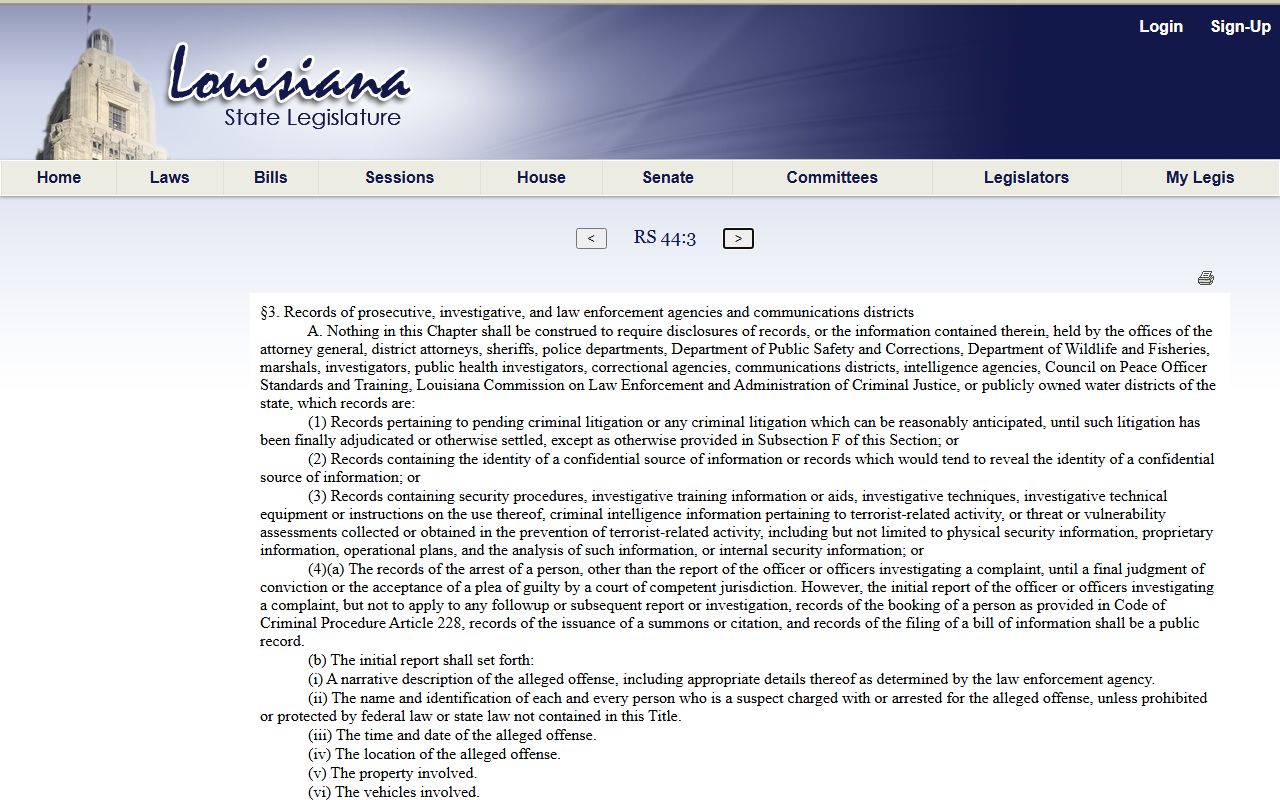
That statute is relevant because active investigative or prosecutive materials may be treated differently from filed court minutes or final dispositions.
Search Sabine Parish Criminal Court Records
The main search path is the Clerk's online access page and the Cott eSearch portal. The Clerk's coverage table states that criminal and traffic indices and images are online from 07/01/1990 to present. Full search screens require login or account access, so the public landing page only confirms the account gateway. For records outside the online range, for certified copies, or for questions about court dates, contact the Sabine Parish Clerk of Court directly.
- Confirm that the record is a criminal court case, not only a jail booking or arrest listing.
- Check the Clerk's online coverage table for the criminal and traffic date range.
- Use Cott eSearch to log in or create an account for Sabine Parish Clerk records.
- Search with the defendant name, docket number, or available date details once inside the account area.
- Use the Clerk for certified copies or court-date questions, and use the 11th JDC transcript form for hearing transcripts.
If the case started with an arrest, the booking side may appear on the Sheriff's jail roster, while the formal charge and disposition are in the court file. The Sabine Parish arrest records and court charges page focuses on that arrest-to-charge path. This page stays with the criminal case file and the court outcome.
Sabine Parish Criminal Case Stages
Criminal case records should be read in sequence. A charge may be filed, amended, reduced, dismissed, or resolved by plea or trial. The final line is not always the first charge listed. Sabine Parish case entries may also reflect bond conditions, bench warrant or capias activity after a missed date, and later sentencing or probation orders. The case-flow summary helps separate accusations from outcomes.
Case flow: Charges Filed › Arraignment › Pretrial / Motions › Plea or Trial › Disposition › Sentencing
| Stage | What Happens |
|---|---|
| Charges filed | The District Attorney screens or files the formal charge that opens the court prosecution. |
| Arraignment | The defendant appears for charge and plea activity, often with counsel or an appointed-counsel request. |
| Pretrial / motions | Parties file requests, discovery issues, continuance motions, bond matters, or suppression questions. |
| Plea or trial | The case is resolved by plea, trial verdict, dismissal, or another court-approved outcome. |
| Disposition and sentence | The docket should show the outcome and any jail, probation, fine, cost, or condition imposed. |
The Clerk's criminal pleading notice also matters for new filings. Pleadings, documents, and exhibits filed with the Clerk on or after January 1, 2026 must be submitted in person or through Tybera Louisiana eFiling. That rule affects how new criminal case documents enter the record, although it is not a public case search tool.
What Sabine Parish Criminal Records Show
Sabine Parish criminal court records are strongest when they are used to answer case-level questions: what charge was filed, when the defendant appeared, what motions were entered, what plea or verdict was recorded, and what sentence followed. They are not a complete criminal history search for every agency, and they are not the same as a sex offender registry, state prison locator, or jail roster.
| Field | What It Shows |
|---|---|
| Case number | The Clerk docket number used to locate the criminal court file. |
| Defendant | The person charged in the Sabine Parish criminal case. |
| Charge | The offense as filed, amended, reduced, dismissed, or resolved by the prosecutor and court. |
| Plea | The defendant's answer to the charge, such as guilty, not guilty, or other plea activity. |
| Hearing and minutes | Court dates, minute entries, motions, orders, and appearances. |
| Disposition | The final or current outcome of the charge or case. |
| Sentence | Jail, probation, fines, costs, conditions, or other penalties ordered after conviction. |
The Louisiana State Police sex offender registry is a separate statewide public-safety resource, not a Sabine Parish criminal court docket.
Use the registry only for registry-status research; use the Clerk record for the Sabine Parish court case and sentence.
Sabine Parish Charges vs Convictions
A charge is an accusation filed or screened for prosecution. A conviction is a guilty finding or plea accepted by the court. A Sabine Parish criminal court record may contain both, but the reader must not treat the first charge line as the final outcome. Charges can be amended, reduced, rejected, dismissed, or resolved by a different plea. The disposition and sentence entries carry the result.
| Point | Charge | Conviction |
|---|---|---|
| Stage | Accusation or filed count | Final guilty plea or guilty finding |
| Who drives it | Prosecutor and charging document | Court judgment after plea or trial |
| Record clue | Filed, pending, amended, dismissed, or nolle prosequi | Guilty plea, verdict, disposition, and sentence |
| Risk | May never become a conviction | May affect sentence, probation, rights, or later expungement eligibility |
The Louisiana felony expungement eligibility statute is one source for understanding how later relief can depend on the type of case and outcome.
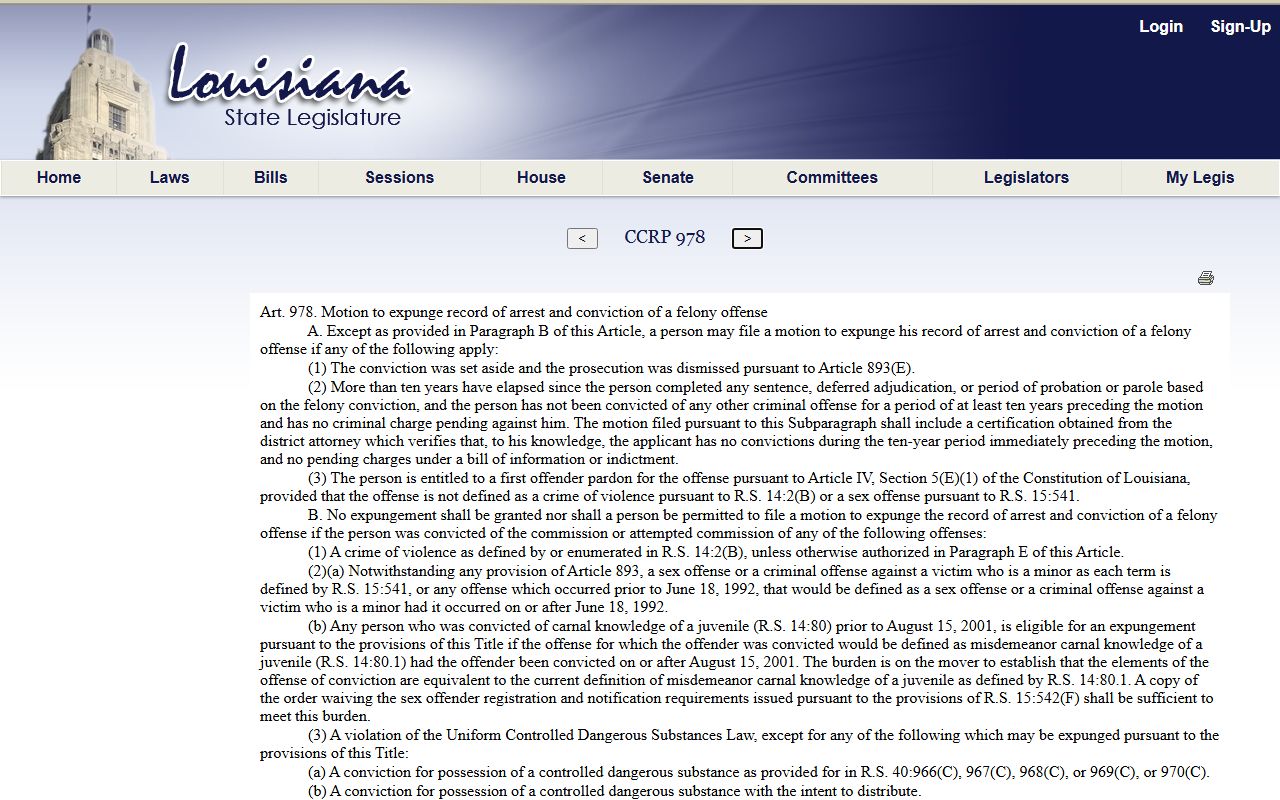
Eligibility turns on Louisiana law and the exact court outcome, so charge wording alone is not enough.
Sealed and Expunged Criminal Records
Sealing and expungement both limit public access, but they are not the same idea. A sealed record is restricted from public view by law or court order. An expunged Louisiana record is removed from public access, but it is not always destroyed for every government purpose. The Sabine Parish Clerk forms page links expungement packets, DWI expungement checklists, and Act 342 marijuana expungement forms, while stating that the Clerk cannot provide advice or assistance completing them.
| Point | Sealed | Expunged |
|---|---|---|
| Public view | Restricted by statute or order | Removed from public access if granted |
| How it happens | Confidentiality rule or judge's order | Motion, agency response, court review, and signed order |
| Sabine access path | Authorized party or court-order route | Clerk forms and filing in the related criminal case or arrest jurisdiction |
| Common mistake | Assuming no docket means no case | Assuming expungement destroys all government access |
The Louisiana Code of Criminal Procedure expungement article table is tied to the forms listed by the Clerk.
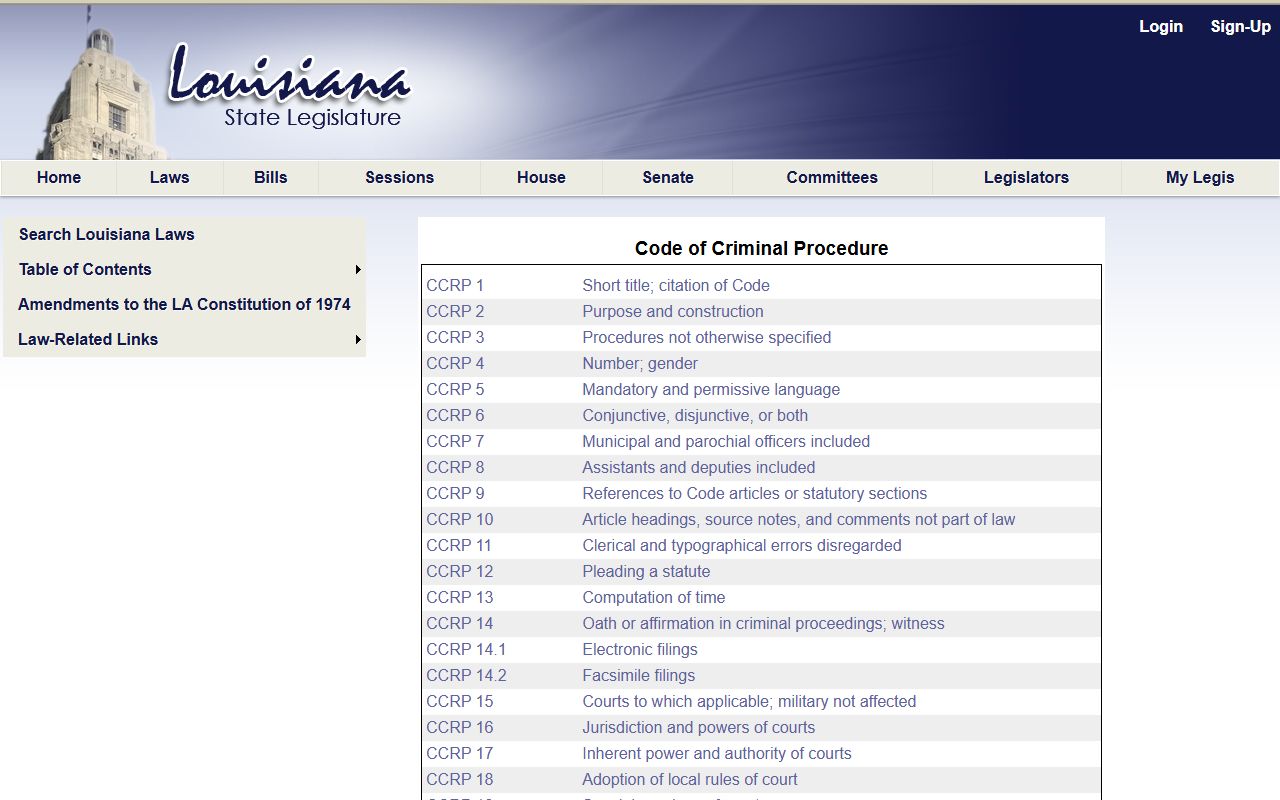
The article table helps identify the legal framework behind the local expungement packets.
Public Access to Sabine Criminal Records
Public access to Sabine Parish criminal court records runs through the Clerk, but Louisiana law creates limits for investigative records, juveniles, victim information, sealed files, and expunged files. La. R.S. 44:1 defines public records. La. R.S. 44:32 addresses copy access from the custodian. La. R.S. 44:36 covers record retention rules. Those public-record rules do not override every confidentiality statute.
Key access point: Sabine Parish criminal case copies come from the Clerk, while jail custody questions go to the Sheriff's Office or facility.
Victim and witness protections also shape what appears in public copies. The Louisiana victim and witness rights statute is one source for those limits.
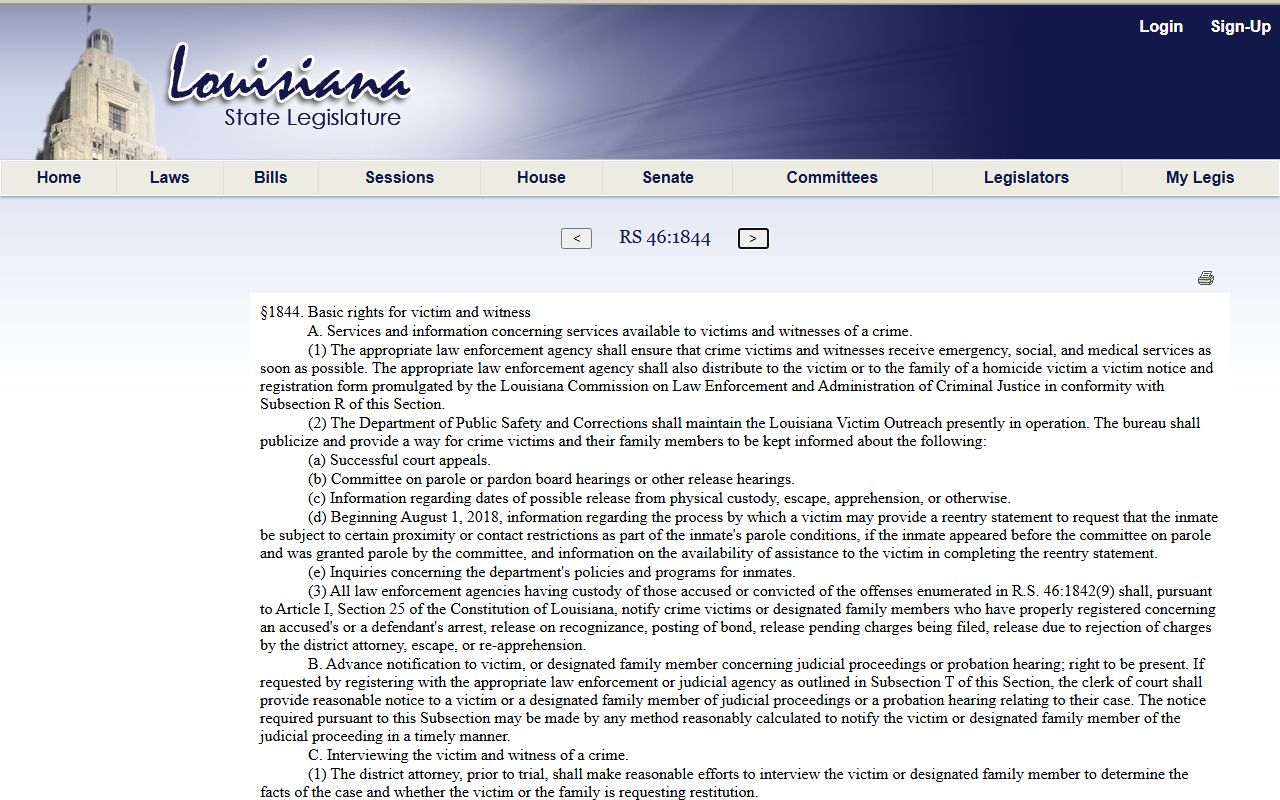
That source supports cautious handling of victim identity, contact details, and protected witness information in criminal court records.
Restricted Sabine Criminal Court Records
Juvenile records, FINS matters, sealed cases, expunged cases, adoption-related material, and victim-sensitive information should not be expected in public criminal search results. Some docket-level facts may remain public while documents or identifiers are withheld. Other records may be available only to parties, attorneys, authorized agencies, or by court order. That means an empty or partial online result should not be read as proof that no restricted case exists.
The Children's Code FINS confidentiality source is relevant to Sabine Parish criminal court records when juvenile or family-status records overlap with court access questions.
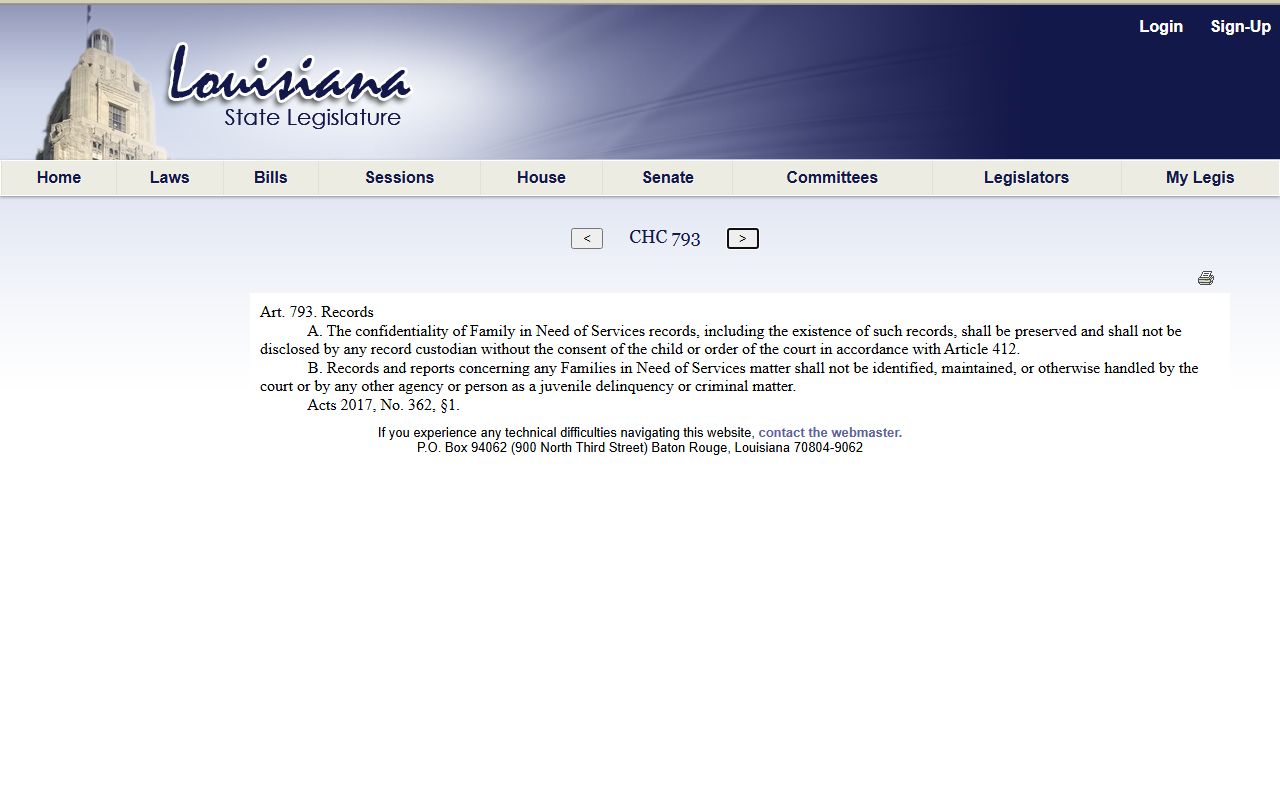
Juvenile confidentiality is one reason criminal record searches should be limited to records that the Clerk or court can lawfully release.
Sabine Criminal Record Requests
For copies, court dates, and criminal case record questions, contact the Sabine Parish Clerk of Court at (318) 256-6223 or write to P.O. Box 419, Many, LA 71449. For district court administration or transcripts, the 11th Judicial District Court lists 400 South Capitol St., Suite 204, Many, LA 71449, P.O. Box 9, and phone (318) 256-9789. For custody status after an arrest, use the Sheriff's roster or jail contacts. If a missed court date may have produced a bench warrant or capias, confirm through the Clerk, issuing court, counsel, or the Sheriff's Office before acting on old docket text.
Background checks need a separate caution. A public court lookup is not the same as an FCRA-compliant consumer report, and it may be incomplete or out of date. Employers, landlords, insurers, and lenders must use proper consumer-reporting channels when federal or state law requires them.
Important: Verify criminal court records with the Clerk before relying on them for legal, employment, housing, or licensing decisions.